H. K Sahu ,B. Rath ,B.K Mohanta , D. Nayak ,S. Rath ,A.K Mallick , R.K Mishra (2025). Biodiversity Conservation and Bioresource Utilisation for Sustainable Development: A Holistic Approach Newredmars Education. ISBN: 978-93-93620-90-3
- DOI : http://doi.org/: 10.28921/BCBUSDHA.261.2025
- Copyright : Get rights and content
- Date of Publication : 04/05/2025
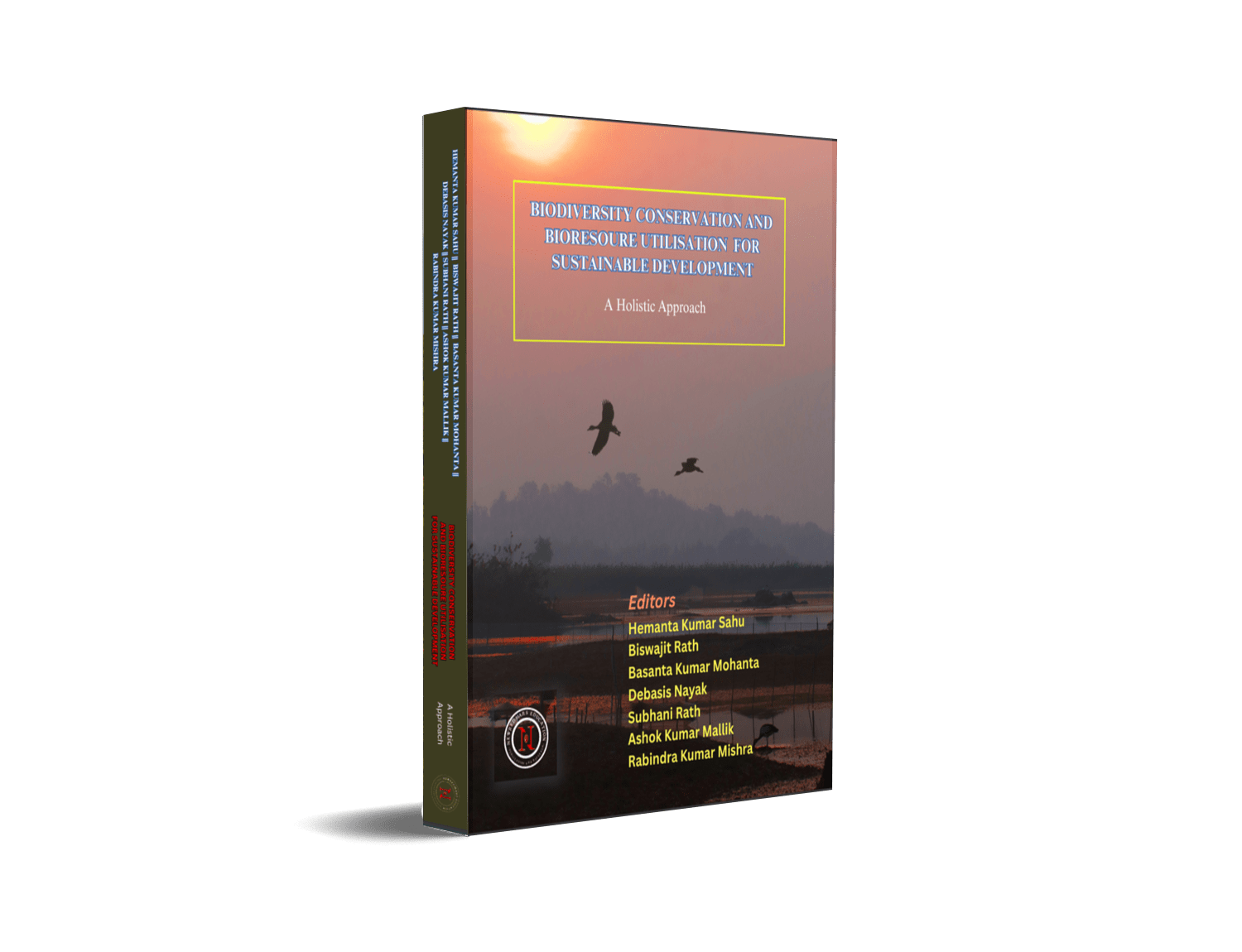
Biodiversity Conservation and Bioresource Utilisation for Sustainable Development: A Holistic Approach
H. K. Sahu¹, B. Rath², B. K. Mohanta³, D. Nayak⁴, S. Rath⁵, A. K. Mallick⁶, R. K. Mishra⁷
drmohantabk@gmail.com
H. K Sahu || B. Rath ||B.K Mohanta || D. Nayak || S. Rath ||A.K Mallick || R.K Mishra
Affiliations
ISBN:978-93-93620-90-3
DOI : http://doi.org/: 10.28921/BCBUSDHA.261.2025
URL: https://newredmars.com/books/ Biodiversity Conservation, Bioresource
Utilisation and Sustainable Development: A Holistic Approach
Get rights and content (Copyright): https://www.copyright.com
Abstract
The present book “Biodiversity Conservation and Bioresource Utilisation for Sustainable Development: A Holistic Approach” brings together 21 chapters that explore the interconnection between biodiversity, traditional knowledge, and sustainable development. Sustainable Development Goal 15 of the 2030 Agenda emphasizes the protection, restoration, and sustainable use of terrestrial ecosystems, forests, and biodiversity, all of which are central to this volume. This compilation discusses the vital role of biodiversity in sustaining livelihoods, particularly among tribal and rural communities. Several chapters highlight traditional ethnomedicinal knowledge, such as those of the Kolha, Oraon, and Dongria Kandha tribes, showcasing how medicinal plants and local practices support healthcare needs. The Similipal Biosphere Reserve features prominently, with studies on wild edible mushrooms, lichens, bee-forage plants, and faunal diversity offering insights into its ecological and economic importance. Other contributions address broader sustainability themes—from the conservation of Indian Skimmers, impacts of cyclones on coastal mammalian fauna, forest fires, and human-wildlife conflicts, to innovations in fish waste management and micropropagation of medicinal plants. Cultural practices like the Kangdali Festival are examined for their role in community cohesion and ecological awareness. The book also covers socio-economic aspects, such as Sabai grass crafts, tribal livelihoods, and policy frameworks for ecological restoration. Altogether, this volume provides a multidisciplinary perspective that integrates science, tradition, and conservation. We believe this book will serve as a valuable resource for students, researchers, professionals, and policymakers committed to sustainable development and biodiversity conservation.
Cite : Sahu, H.K; Rath, B.; Mohanta, B.K; Nayak, D; Rath, S. ; Mallick, A.K; Mishra, R.K. “Biodiversity Conservation and Bioresource Utilisation for Sustainable Development: A Holistic Approach ” Newredmars Education , 2025, 1-340, ISBN: 978-93-93620-90-3
Published Document Format
- Print Book | Paper Back
- E-Book-Flip
- Book App
- Audio Book
- AI Video Format | EclassAtoZ
Indexing
- Amazon
- Google Scholar
- Google Book
- Kindle-Amazon
- Index in Smritva
Social Media
- YouTube
- Face Book
- Linkdin